



UP LIFT: a retrofit solution for buildings with deteriorated wall bases
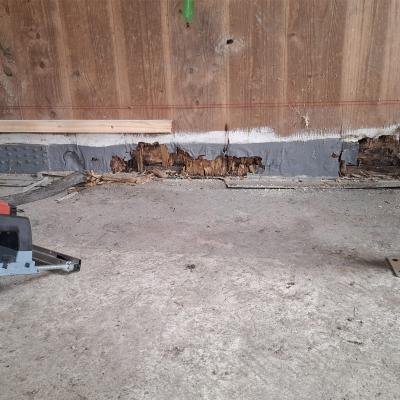
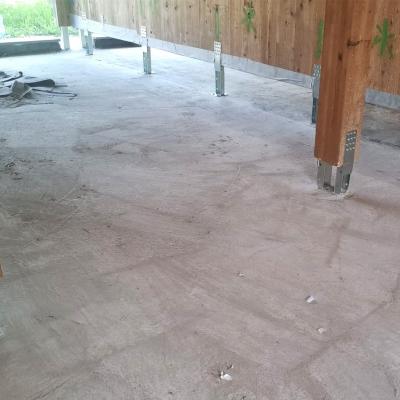
An issue is starting to appear more and more frequently on construction sites: several timber buildings constructed over the last 5–10 years are beginning to show problems at the ground connection due to poor management of the interface. More specifically, deterioration is occurring at the base of the wall.
The causes can vary, ranging from poor moisture control and overlooked construction details to workmanship that fails to meet the level of precision timber construction demands. The result? Relatively new buildings requiring remedial work more commonly associated with refurbishment than new builds.
At that point, the question is no longer how to design better, but how to deal with a structure that has already been built. And is deteriorating.
Restore rather than demolish
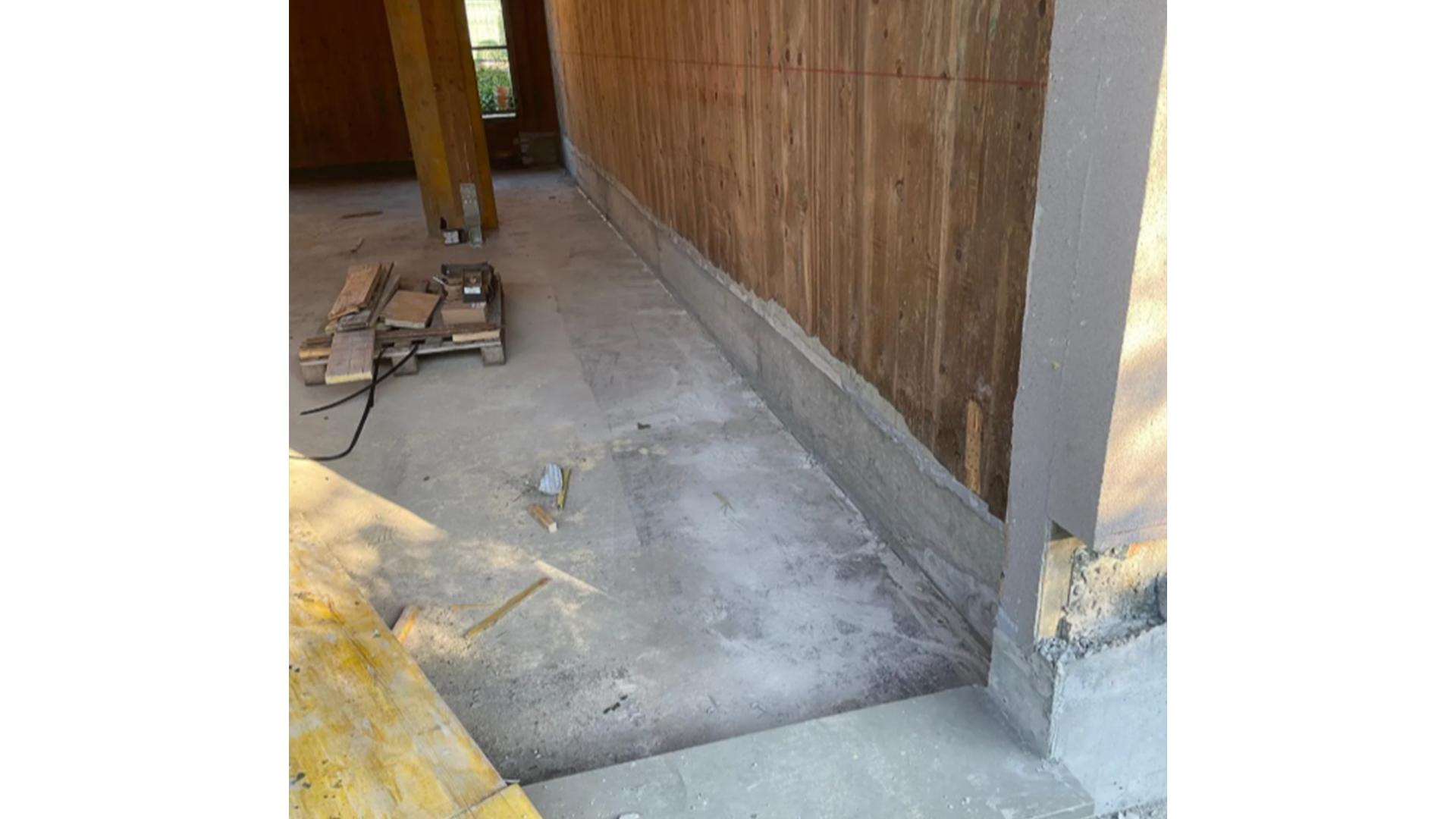
This was exactly the situation that EdilCraft s.r.l. faced on a project in Parma. A two-storey CLT building, constructed in 2013 and left unfinished for several years, had around 100 linear metres of wall affected by moisture-related deterioration.
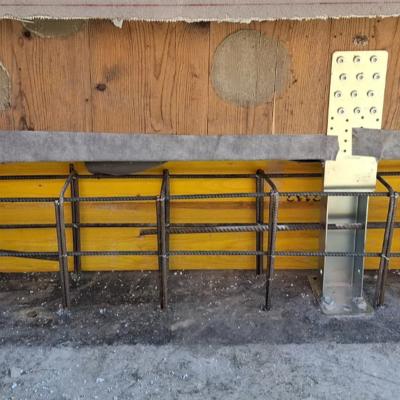
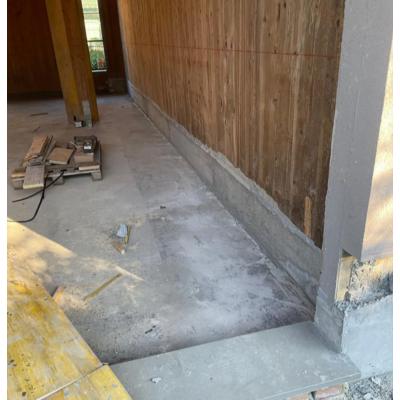
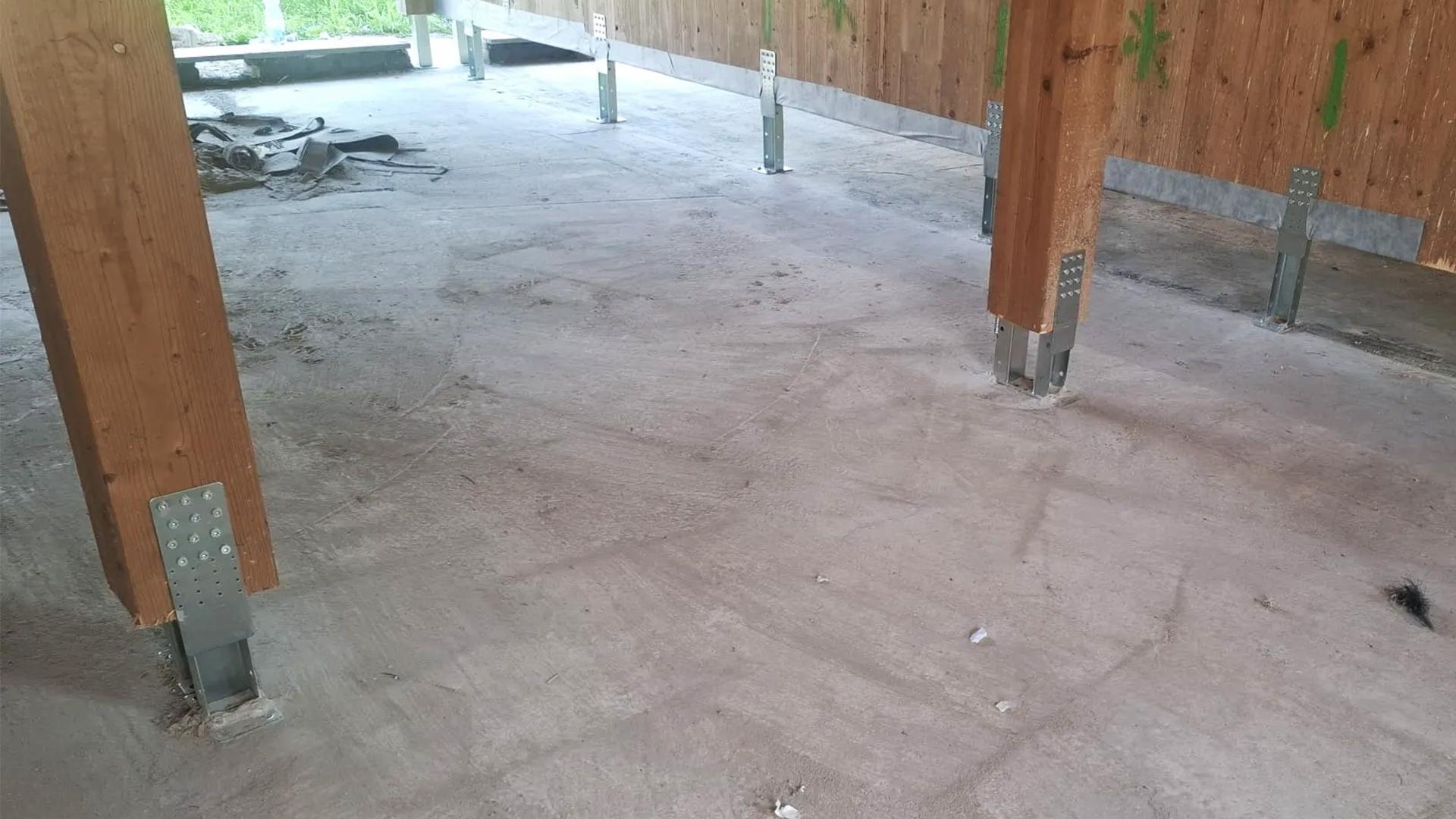
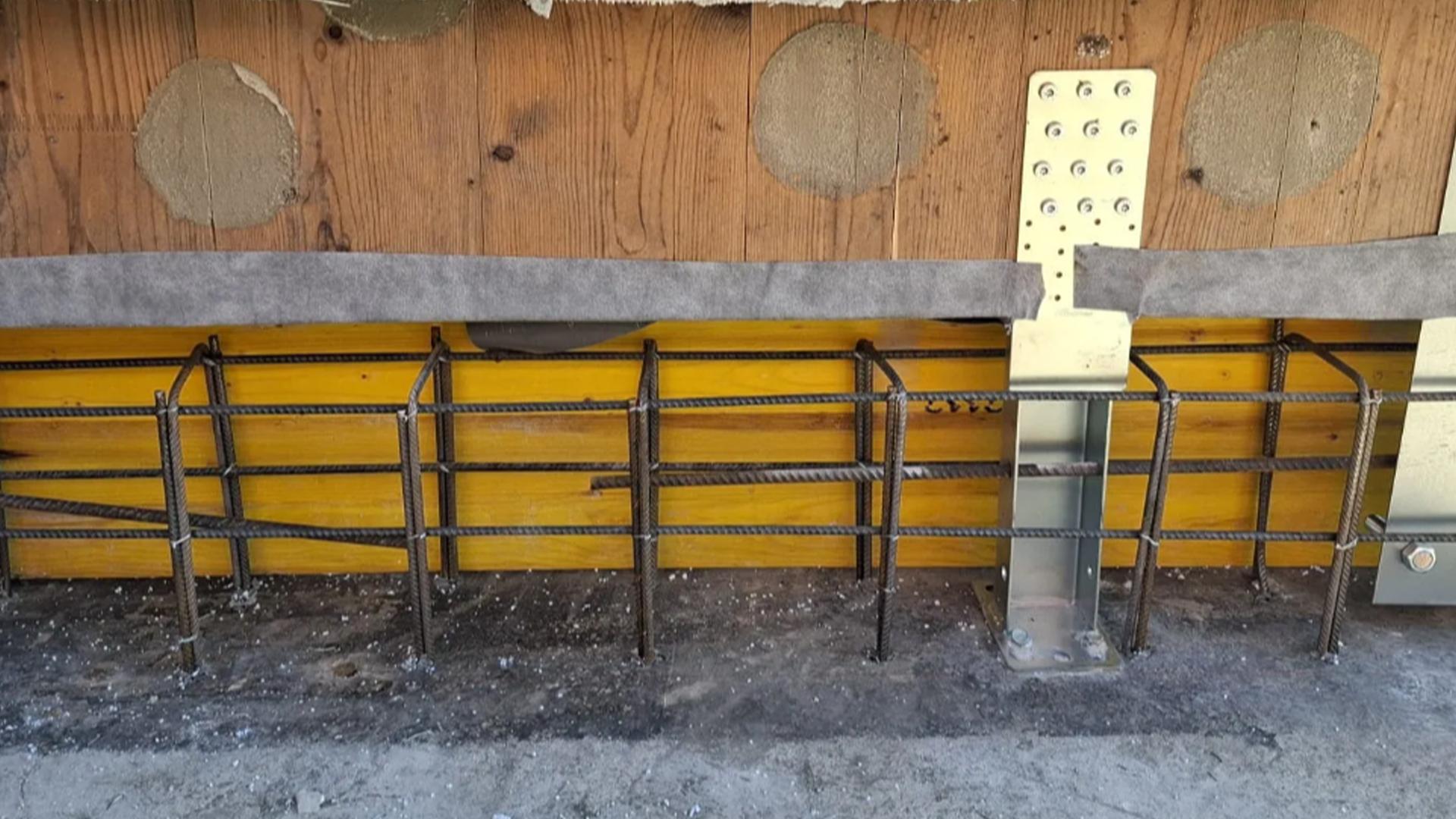
The design strategy was clear: avoid demolition and focus on remediation, making it possible to complete the building project. The work had to be carried out in stages. The building was tackled section by section, removing the deteriorated parts and constructing a new reinforced concrete foundation beam. Throughout this process, UP LIFTplayed a key role as a support system, helping to maintain the stability of the structure while the works were carried out. A different application from the one the system was designed for, but one that is proving increasingly useful on site when restoring rather than rebuilding.
UP LIFT: from on-site solution to retrofit tool
UP LIFT was developed to solve a challenge in new-build construction: the mismatch between concrete tolerances and the precision of timber walls. The principle is simple: reverse the sequence, install the walls first and cast the foundation beam afterwards, once the geometry is fixed.
This makes it possible to:
work with greater control during installation and manage tolerances more effectively;
raise the wall base, reducing exposure to moisture;
simplify ground fastening, avoiding the need to drill into the foundation to install the anchors.
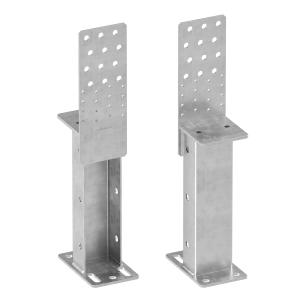
Structurally, the props support the building during assembly, resisting tensile and shear forces until the foundation beam is cast and takes over the compressive loads.
But it's when the problem already exists that the system shows its true versatility. As this project demonstrates, UP LIFT can support retrofit projects, helping to recover a damaged building and proving to be one of the very few standard systems suitable for this type of work.
A system that makes the job possible
The success of the Parma project was not the result of a single product, but of an integrated system designed to address a complex issue.
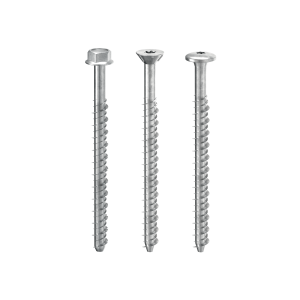
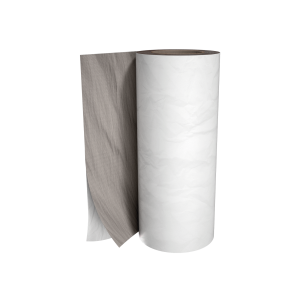
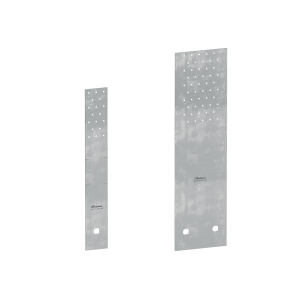
Structural connections were entrusted to components such as HBS PLATE screws, providing strength and continuity between the elements, while SKR anchors ensured the temporary connection between UP LIFT and the foundation until the foundation beam was cast. WHT PLATE C plates helped distribute forces correctly at the most highly stressed joints, while PROTECT tape played a key role in protecting the interface and reducing the risk of further water ingress.
Together, these solutions make the intervention possible: a technical sequence that restores a compromised structure to a sound and durable condition.
A challenge that brings good design back into focus
What emerges from cases like this is a shift in scale. If the ground connection is incorrectly designed or treated too superficially, it can become a critical point that affects the entire service life of the building.
And above all, it challenges the assumption that a recently constructed building is automatically more reliable and durable. This is why it is essential to take a long-term view, giving proper attention to both the design and execution of crucial connections. This is where the Rothoblaas range comes in, complete with solutions for fastening, airtightness, waterproofing and soundproofing.
All rights reserved
Technical Details
- Companies:
- Domenico Altieri EdilCraft s.r.l.
- 国家:
- Italy
- 产品:
- HBS PLATE SKR | SKS | SKP UP LIFT WHT PLATE C