



Structural retrofitting of the roof and backstage area of the Teatro Farnese in the Pilotta complex
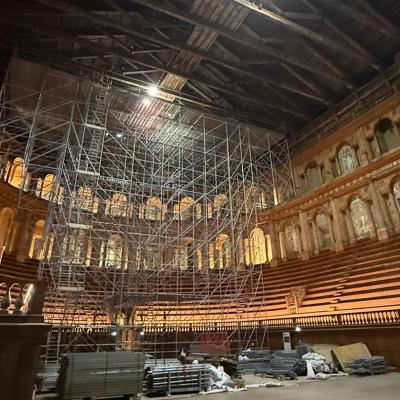
On the first floor of the Palazzo della Pilotta, a monumental painted wooden doorway surmounted by a ducal crown leads into the Teatro Farnese: a space that still preserves the memory of the sumptuous court life of the Farnese Dukes.
Almost completely destroyed by bombing in 1944 and subsequently rebuilt, the theatre today offers one of the most extraordinary examples of 17th-century theatre architecture: the monumental classical-style proscenium, the “maraviglia” of Baroque theatre and the architectural style of Giovan Battista Aleotti.
Yet heritage of such value does not preserve itself.
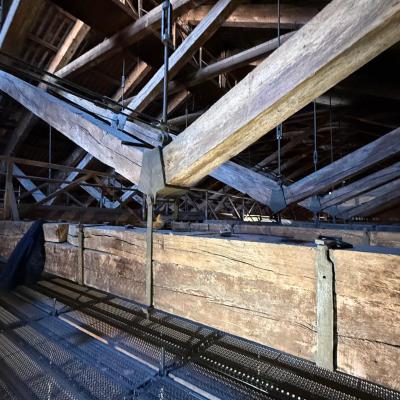
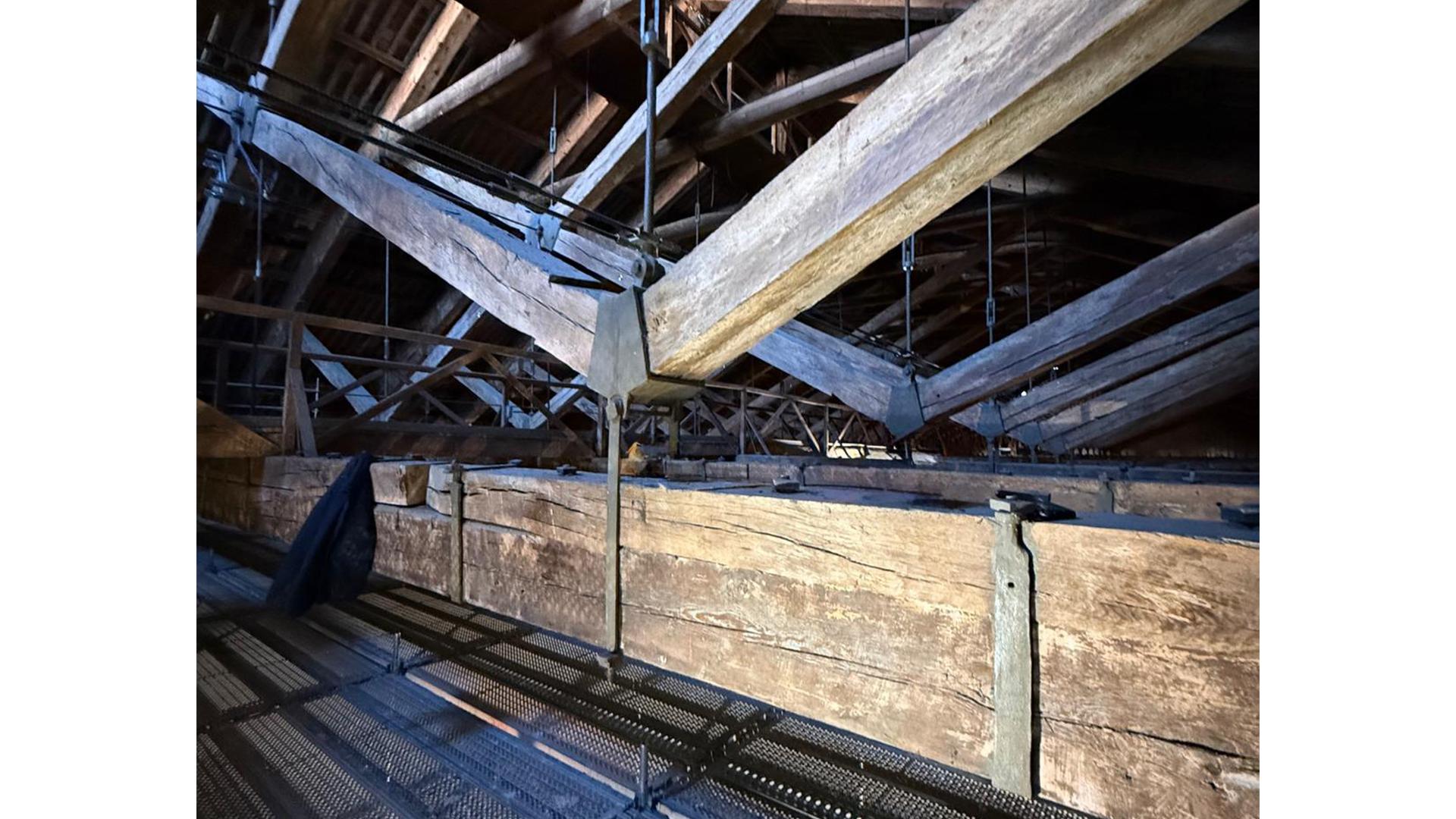
Behind one of Italy’s most celebrated stage sets, the load-bearing structures supporting the roof and backstage area carry the weight of almost four centuries of history and now require targeted measures to ensure the safety and durability of the entire Monumental Complex.
A construction site in the heart of the Pilotta
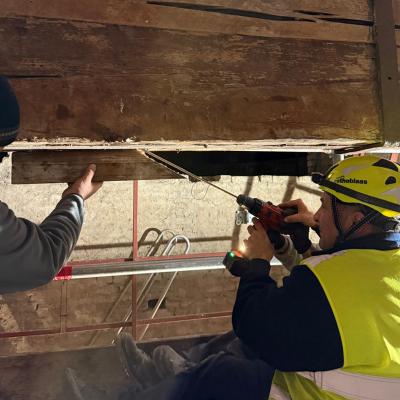
It is in this extraordinary setting that, since February 2026, Costruzioni Marchesi has been working to strengthen the roof and backstage structures of the Teatro Farnese, essential interventions to safeguard and preserve one of the most iconic spaces in Parma’s Pilotta complex.
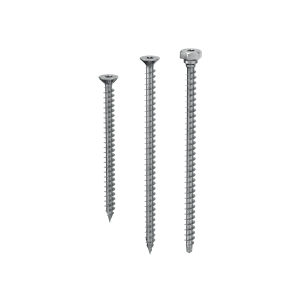
The roof is being strengthened by reinforcing the existing timber trusses, the structural elements that have supported the weight of the roof above the stage and backstage area for centuries. For the reinforcement joints, which must provide high tensile and shear resistance, Rothoblaas VGS fully threaded structural timber screws were selected.
By its very nature, this project demands the utmost care: the structure is both historic and listed, meaning that every intervention must be precise, controlled and as reversible as possible.
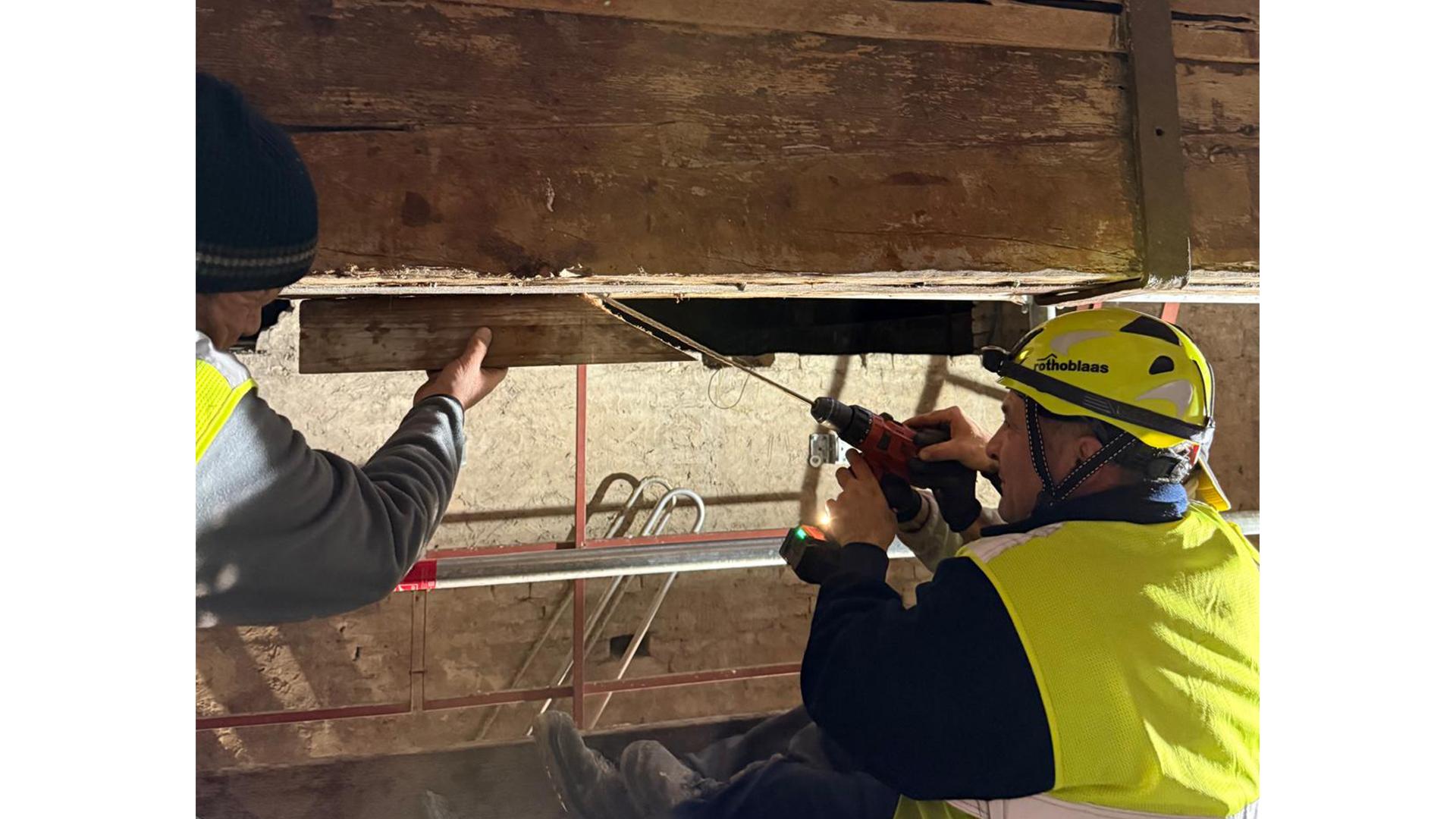
Structural retrofitting: innovating to restore existing structures
Today, more than ever, it is important to propose recovery solutions for renovating the existing building stock according to economically sustainable, environmentally friendly and energy efficient logics. This is particularly true of historic and monumental heritage, where interventions must take into account regulatory constraints, cultural value and the fragility of the original materials.
Structural reinforcement works designed and implemented in these contexts must optimally combine several factors: seismic upgrading, increased strength and stiffness of the floor structure, as well as compliance with the principles of conservation, such as material compatibility, reversibility and minimally invasive intervention, without overlooking the need for effective acoustic insulation between the different levels of the structure.
To meet these requirements, Rothoblaas has developed specific systems for the retrofitting of existing structures, using both timber-to-timber and timber-to-concrete reinforcement: technologically advanced solutions including high-strength, high-stiffness connectors, protective membranes, self-adhesive insulation products and other accessories designed to integrate with historic structures without compromising their integrity.
VGS: the screw that delivers strength and reliability
When reinforcing structures such as the Teatro Farnese trusses, the choice of connector is far from a minor detail: it is a key factor in the success of the project. VGS timber screws feature a deep thread and high-strength steel (fy,k = 1000 N/mm²), ensuring excellent tensile performance. They are approved for structural applications subject to stresses in any direction relative to the wood grain, from 0° to 90°.
The countersunk head makes the screw ideal for use with plates and concealed reinforcement, which is particularly important when structural works need to remain as unobtrusive as possible. For screws longer than 600 mm, the hexagonal head provides a secure grip for the power tool. Values are also tested, certified and calculated for fastening standard Rothoblaas plates.
VGS screws are also free from hexavalent chromium and comply with the strictest regulations on chemical substances (SVHC), with REACH information available. Made of bright zinc plated carbon steel, they are suitable for use with wood-based panels, solid timber, glulam, CLT, LVL and high-density timber in service classes 1 and 2.
A broader project for the future of the Pilotta
The roof and backstage works at the Teatro Farnese are part of a wider redevelopment plan for the theatre and the Pilotta complex, which has also included the restoration of the Teatro Farnese’s stucco statues, damaged by bombing during the Second World War.
This project is a perfect example of what it means to structurally retrofit a historic building today: rather than a standalone intervention, it is a coordinated process in which structural safety goes hand in hand with preserving the site’s architectural and cultural heritage.
A CURA DI:
Arch. Fabio Corradi - Funzionario Architetto
Complesso Monumentale della Pilotta
Ministero della Cultura
Costruzioni Marchesi
All rights reserved