



A high-performing building envelope can be spotted as early as the construction stage
How do you design a ventilated façade that can withstand wind and rain while preserving the long-term performance of the building envelope?
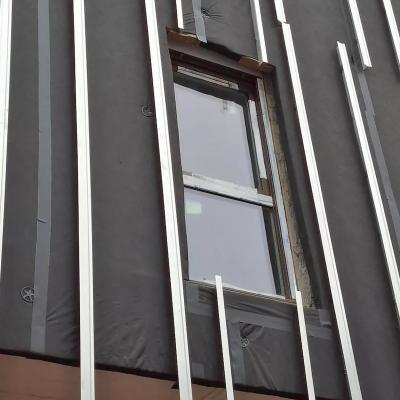
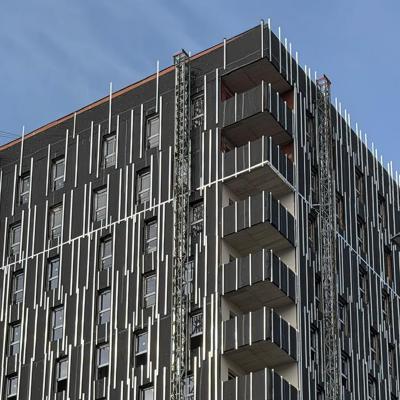
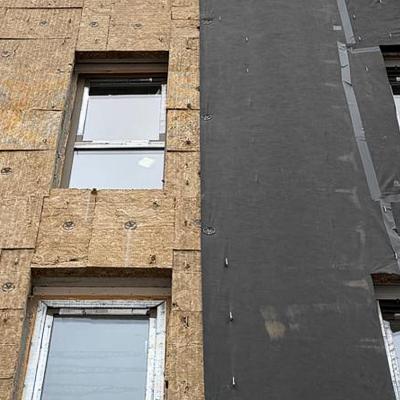
A building envelope may be designed on paper, but its true performance is only demonstrated on site. This is especially true when working in regions exposed to particularly harsh weather conditions. That is exactly the case along Spain's northern Atlantic coast, where designing a ventilated façade means dealing with frequent wind-driven rain, consistently high humidity throughout the year and strong coastal winds. It is not the intensity of a single weather event that makes the difference, but its repeated occurrence. Under these conditions, the limitations of less robust systems quickly become apparent as they are subjected to continuous cycles of water, air and wind. In environments like these, the performance of a ventilated façade is determined not only by the materials used, but by how well the entire system copes with environmental stresses.
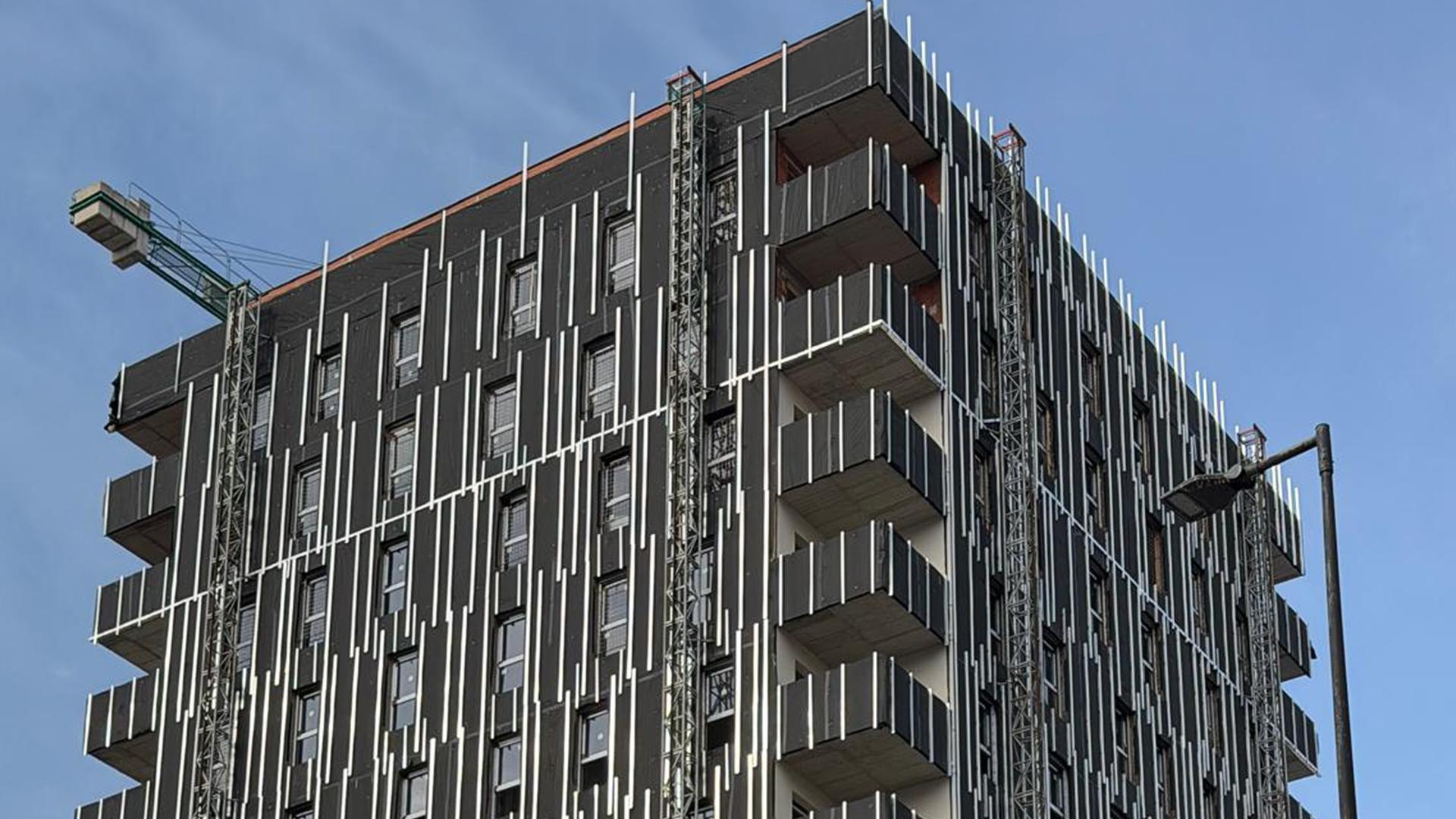
Protecting the façade from construction onwards
This is clearly illustrated in Asturias, just a few kilometres from the Cantabrian Sea, where strong Atlantic winds directly affect façades that are still under construction. It is during this temporary stage that design issues, often overlooked during the planning phase, become visible. On site, membranes – particularly the mechanically fixed type – and layers that have not yet been fully sealed may be exposed to the so-called sail effect. When wind penetrates the gap between the insulation and the membrane, the resulting pressure can compromise the stability of the build-up, causing deformation, damage or even detachment of the materials.
This is why it is essential to consider the expected weather conditions from the outset and choose solutions that remain stable throughout the construction process, and not just once the façade has been completed. In this respect, fully adhesive membranes offer a significant advantage. Because they are fully bonded to the substrate, they limit air movement behind the membrane, reducing the risk of wind damage during construction and helping to safeguard the integrity of the building envelope until the façade is complete.
More than weatherproofing: managing water, air and wind over time
In highly exposed locations, designing a ventilated façade means balancing several factors that act simultaneously on the building envelope. Simply preventing water ingress is not enough. The real objective is to create a system that protects the most sensitive layers, maintains the performance of the insulation and promotes long-term drying, preventing moisture from becoming trapped. When this balance is lost, the building's energy performance inevitably declines and deterioration can accelerate. This is why choosing membranes that provide effective protection against the elements without compromising the breathability of the system is so important.
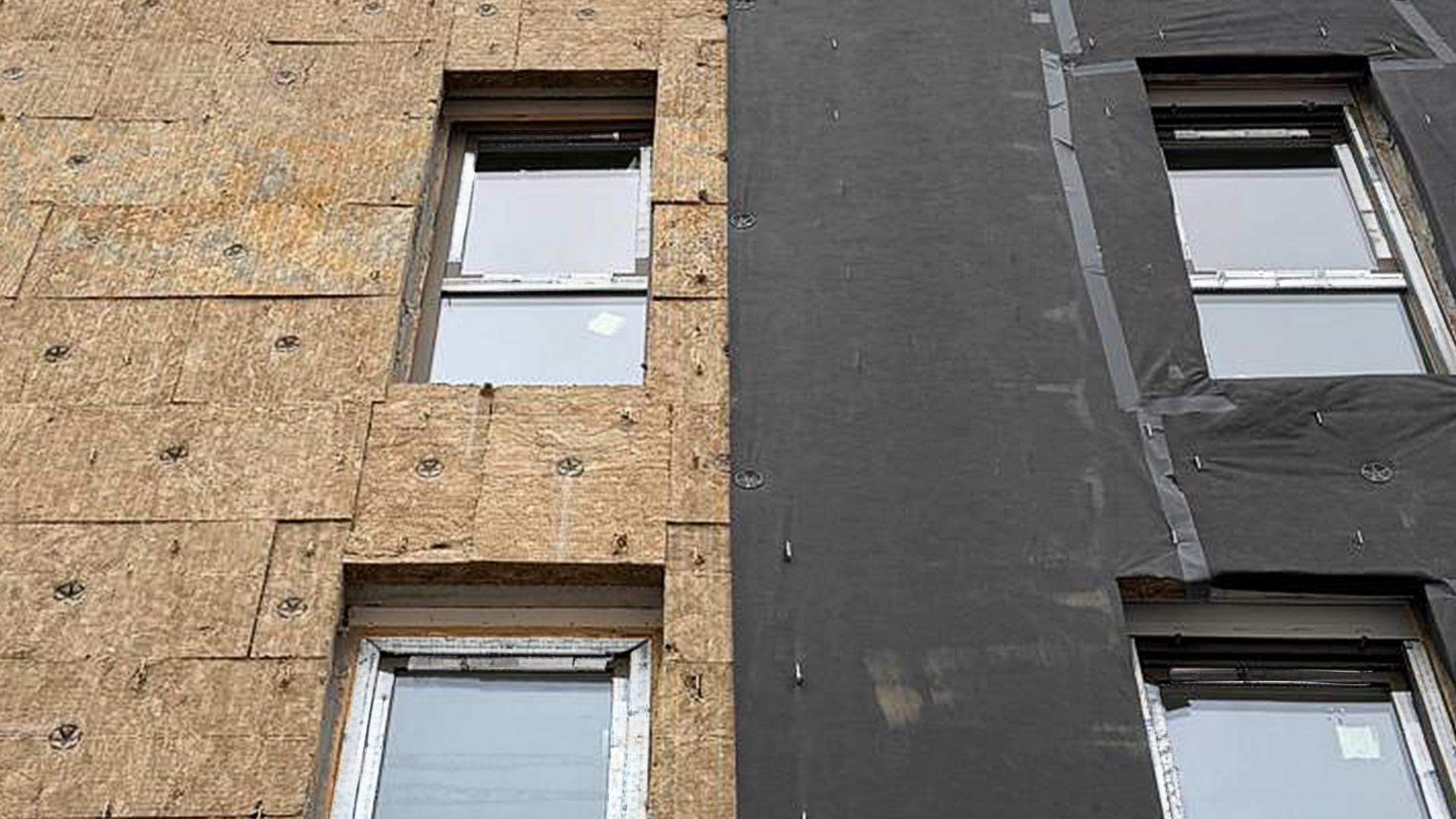
TRASPIR EVO UV ADHESIVE: the Rothoblaas solution for ventilated façades
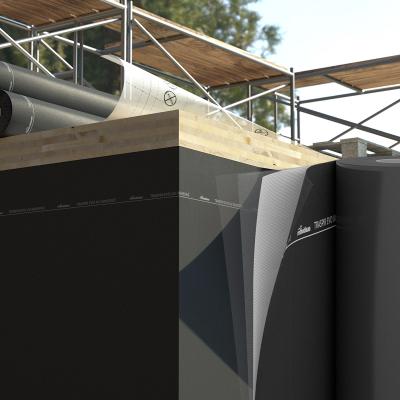
Among the solutions developed to meet these requirements is TRASPIR EVO UV ADHESIVE, a monolithic, highly breathable, UV-resistant membrane. It has been designed to protect insulation both during construction and throughout the building's service life, while also allowing efficient vapour diffusion. In a ventilated façade, its benefits are twofold. On the one hand, it enhances the building envelope's protection against heavy rain, wind and UV exposure. On the other, it helps preserve the long-term performance of the insulation layer by preventing moisture and air infiltration from compromising its effectiveness.
Its fully self-adhesive surface also enables faster, more secure installation, reducing the risk of the sail effect during temporary construction stages. The membrane can be pre-installed in the factory and used to protect prefabricated elements in unitised façade systems, including during transport and subsequent on-site handling and installation.
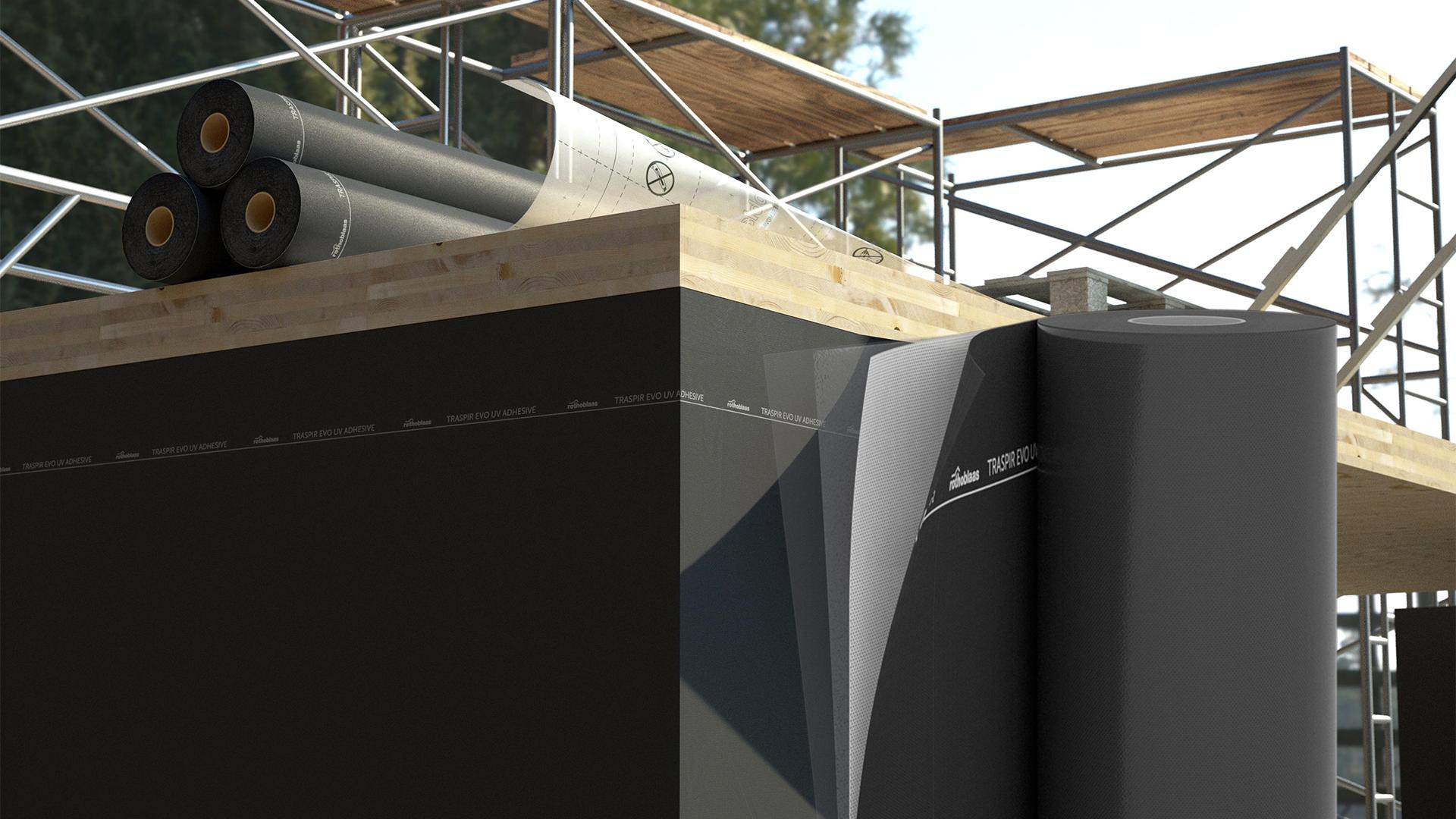
Building envelope performance depends (above all) on the layers you can't see
The conditions observed in Asturias are a reminder of one of the fundamental principles of building envelope engineering: the most important layers of a façade are often the ones you don't see. It is the layers responsible for managing water, air and moisture over time that determine the durability of the system and ensure its long-term performance. Designing a ventilated façade for challenging climatic conditions therefore means looking beyond the finished appearance and considering how the building envelope will perform at every stage of its life cycle, from installation on site through to the building's service life.
Only by designing each layer to work in harmony with the others is it possible to create a building envelope that delivers lasting performance, protection and durability – even when the components that make it possible remain entirely out of sight.
All rights reserved