


Lifting prefabricated timber elements: keeping control, time and budget on track
Timber prefabrication, installation times and reusable lifting systems
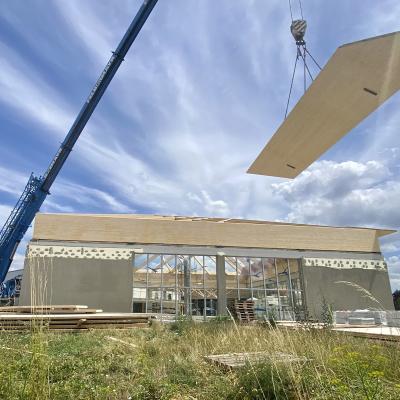
Those who choose timber construction often do so because of the much shorter delivery times compared to traditional construction systems.
Producing elements off site – complete with services, insulation and fasteners – combined with a Design for Manufacturing approach, modular design and on-site assembly, makes for a highly dynamic construction process. That said, a setback at any point can compromise the entire schedule.
If everything runs smoothly at the factory but then loses momentum on the construction site, the advantage can quickly be lost.
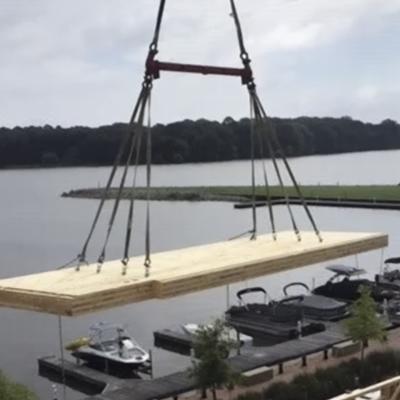
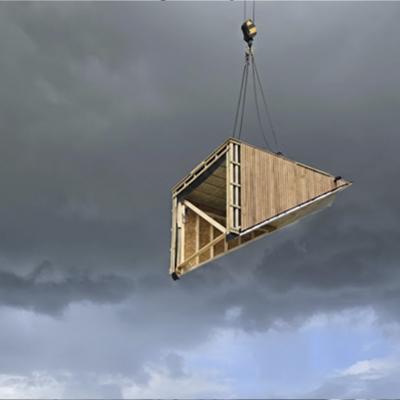
Certain activities come with greater risks than others: lifting materials on site – particularly when dealing with prefabricated timber elements, fully assembled walls or entire modules of a prefabricated timber house – is one of them.
Every manoeuvre involves heavy loads, hard-to-predict forces and a chain of responsibility with direct consequences for safety, assembly times and overall costs.
Where a project's value depends on process efficiency, the use of unsuitable lifting equipment or connection systems increases exposure to operational risks and, above all, leads to cost overruns that are frequently underestimated at the pricing stage. Single-use elements, fasteners with declining performance and equipment not designed for prefabrication ultimately have a major impact on the actual cost of lifting.
Lifting materials on site: the hidden challenge of timber prefabrication
When it comes to assembling prefabricated timber elements, lifting plays an integral role. Walls, floors, frames and modules arrive on site already assembled, with tight tolerances and, in some cases, surfaces designed to remain exposed.
Handling, rotation, acceleration and braking cause the transfer of loads that act on localised points. The use of screws not designed for lifting, conceived as single-use fasteners, leads to deformations that are not immediately visible: loss of shank straightness, thread damage and a reduction in clamping capacity under load.
On site, it is not unusual for these screws to be reused to keep costs down, resulting in an exponential increase in risk.
The result is a familiar paradox: when lifting is managed using inadequate systems, costs can rise to the point of eroding project margins – especially on prefabricated timber housing or multi-storey building sites, where lifting cycles are multiplied.
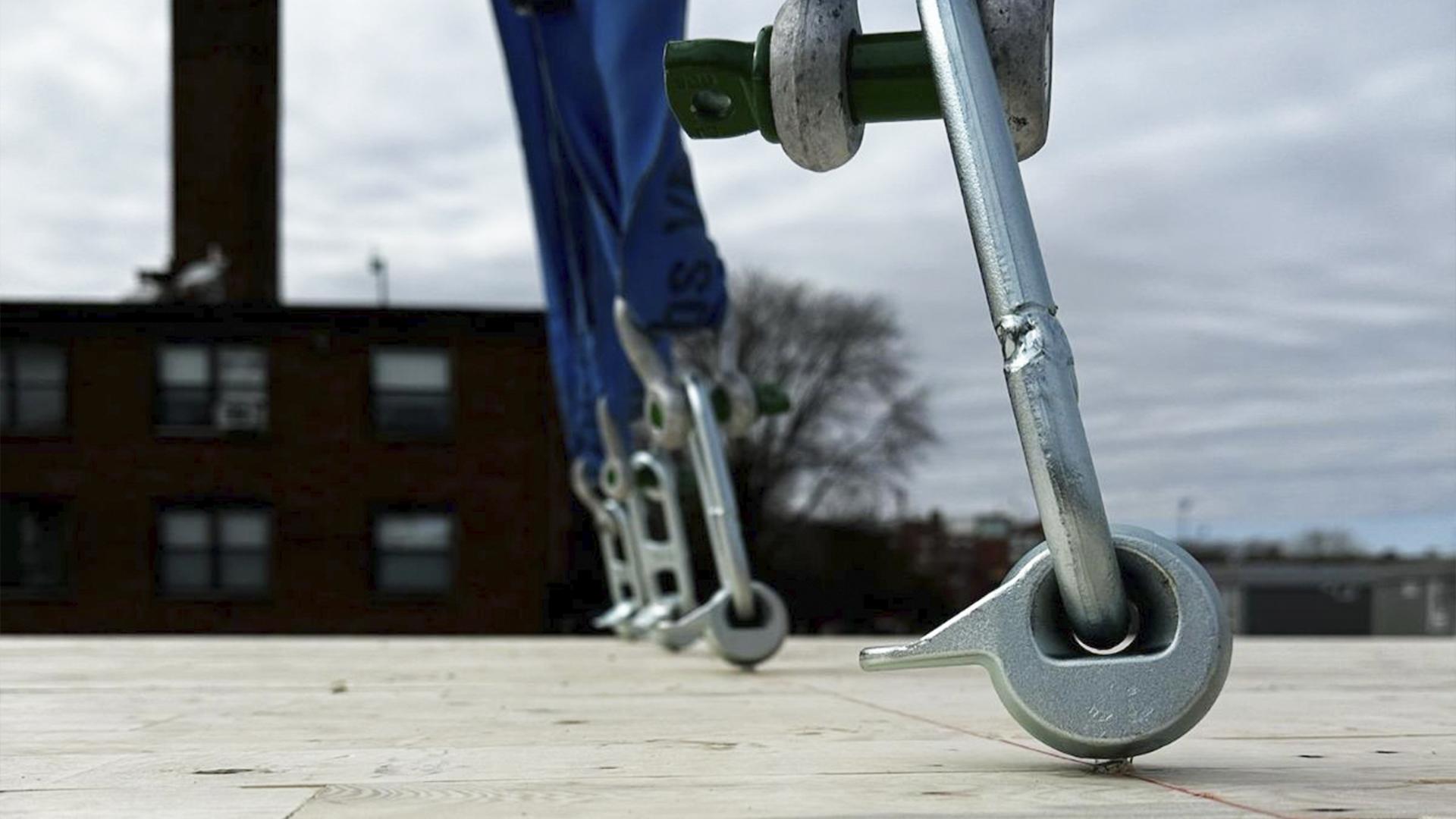
On-site lifting machinery and dedicated connection systems
On-site lifting machinery, such as cranes and handling systems, represents only one part of the equation. The other half is made up of the connection devices, which must interface directly with the prefabricated element.
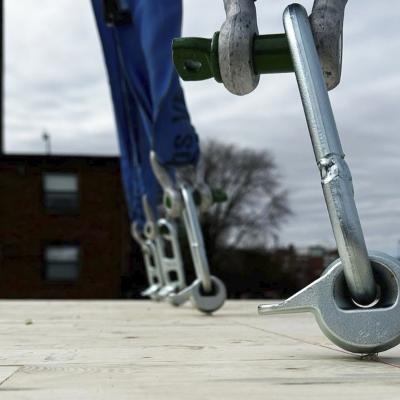
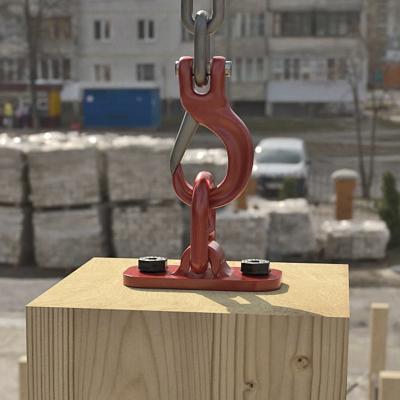
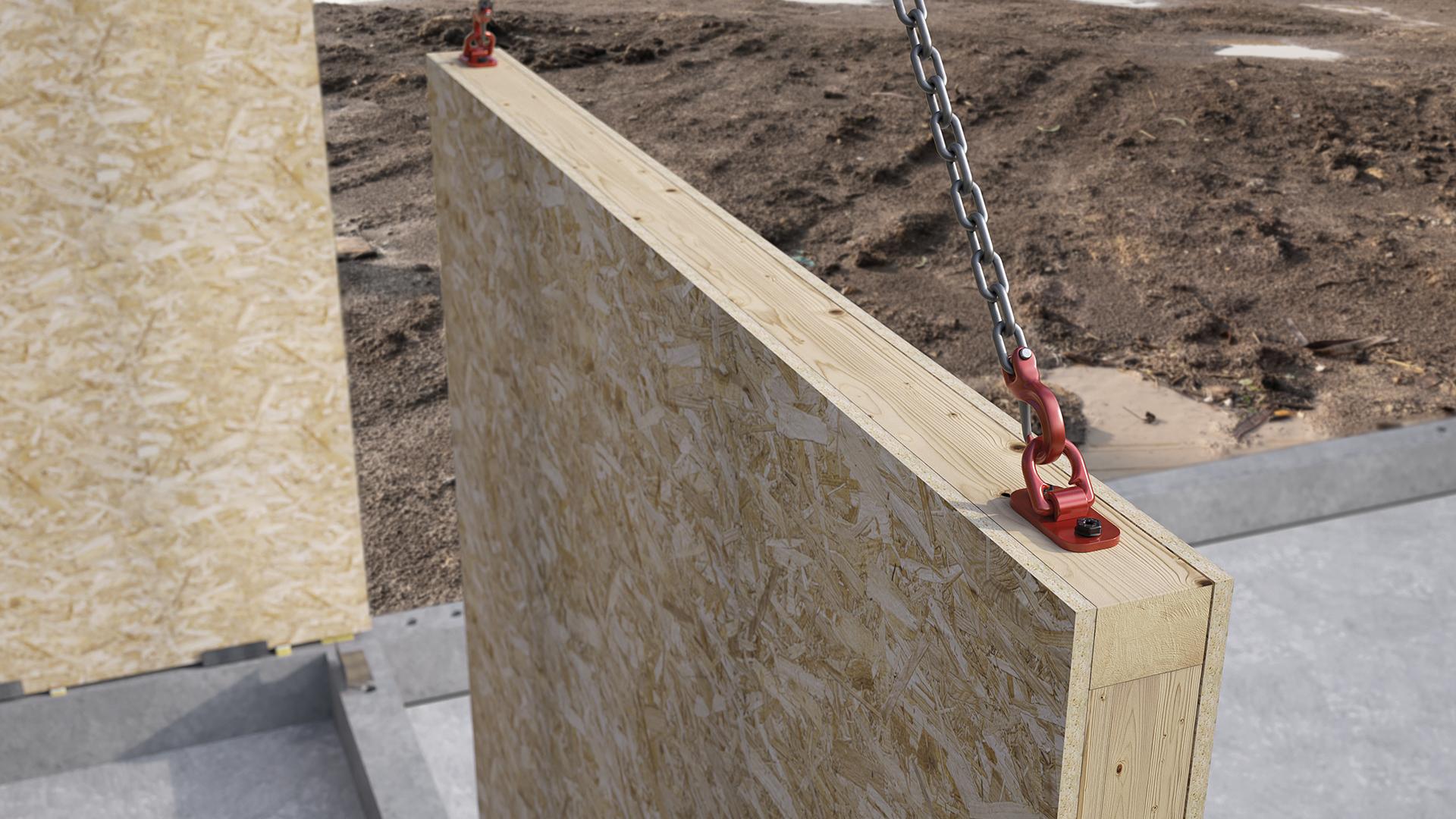
When lifting timber panels, traditional slings can create localised pressure and damage surfaces, particularly where the bottom is designed to remain exposed. This considered, quick-connect metal lifting systems such as WASP make it possible to design and control the entire slinging process. WASP connects to a screw such as VGS PLATE, which can also be installed off site, using its integrated jaws to secure the screw head fastened into the timber element.
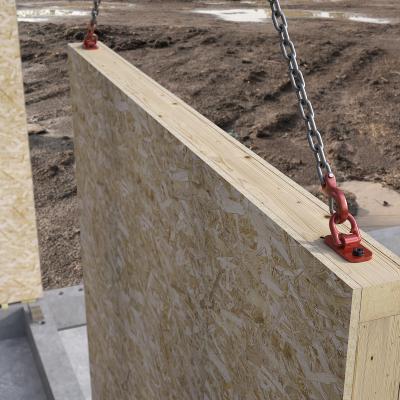
For heavier loads, a special plate for lifting timber panels such as RAPTOR allows forces to be correctly distributed by adapting the number of fasteners to the weight of the element. The range, which includes RAPTOR MINI and RAPTOR MAXI, covers requirements from small prefabricated elements through to components weighing over three tonnes, while still compatible with the main cranes used for lifting timber panels, also thanks to EAGLINK.
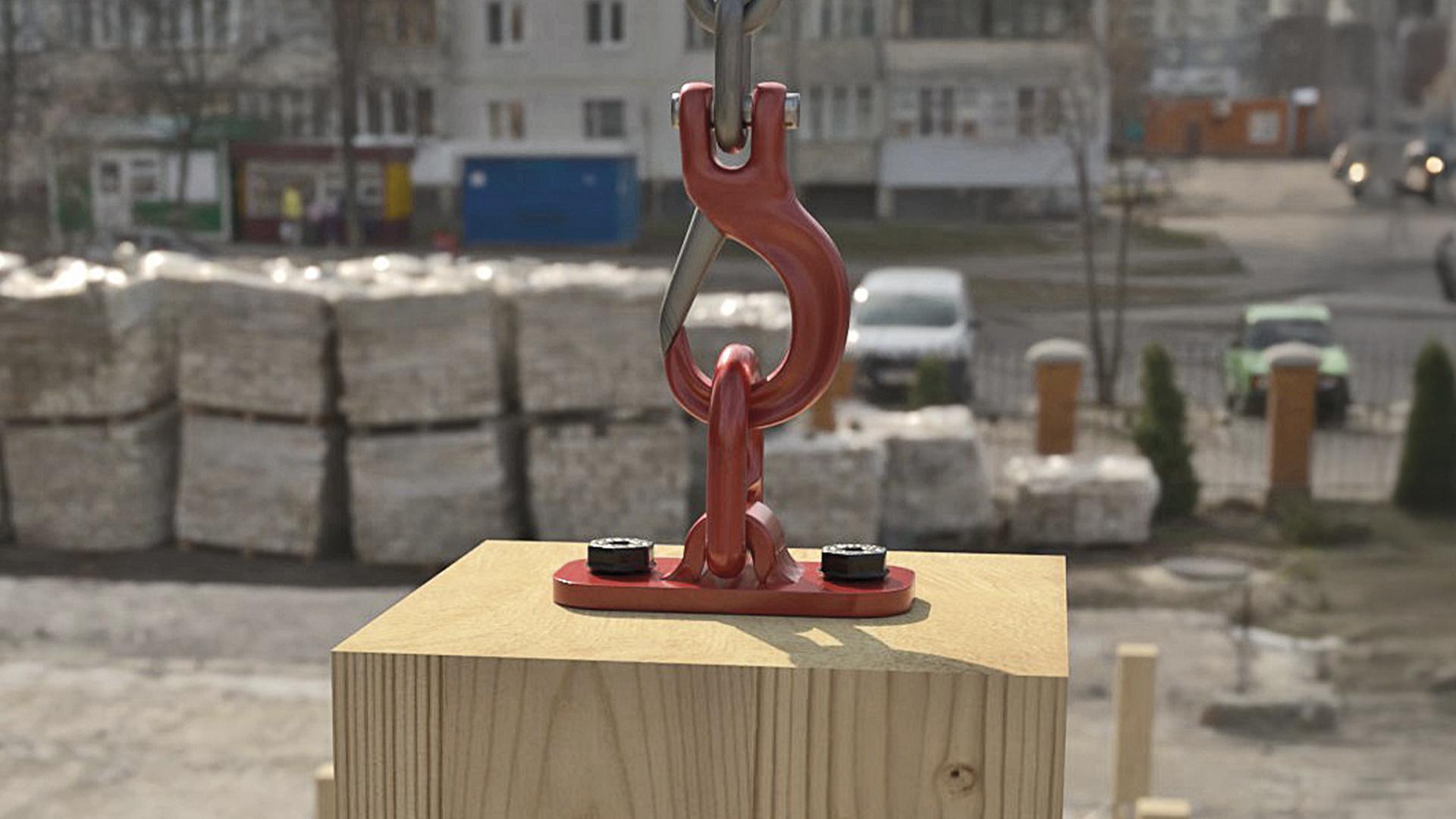
Transport and lifting: the innovation lies in the reusable screw
Fastening remains the critical point of many lifting systems.
For years, the industry has accepted the idea that screws used for lifting must be single-use. This approach, however, is in direct conflict with the principles of Design for Manufacture and Disassembly and of the circularity of building components, where every element should be designed to reduce waste and redundant operations.
VGS PLATE was developed precisely to overcome this limitation. Rather than a structural screw adapted for lifting, it is a screw specifically designed for the transport and lifting of timber elements and can also be used as a permanent metal-to-timber structural connection. The hexagonal, tapered head ensures stable engagement with systems such as WASP and RAPTOR, while the thread geometry allows it to withstand multiple insertion and removal cycles without any loss of performance.
The ability to reuse a fastener in a verifiable way changes the economics of lifting. Not only does it reduce the number of screws that need to be purchased, it makes the process more predictable, eliminating the temptation to reuse components that are not fit for purpose. On sites where dozens of prefabricated timber elements are installed, this factor has a direct impact on costs.
We spoke about it here: Design for Disassembly: a new approach to sustainability in timber construction
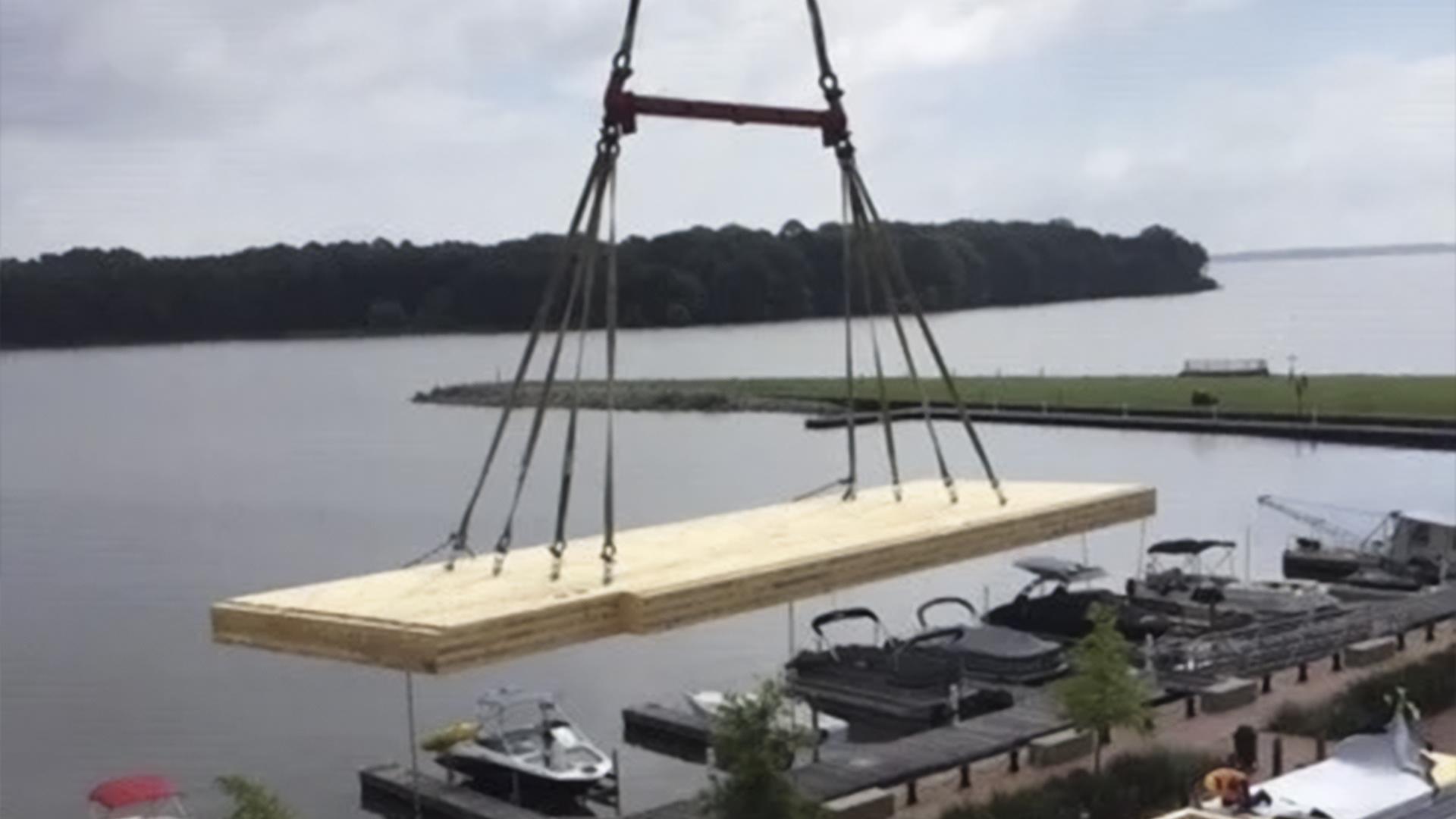
Design for Manufacturing and lifting: equipment as an ally of efficient construction sites
Design for Manufacturing and Assembly (DfMA) stems from the combination of Design for Manufacturing (DFM) and Design for Assembly (DFA). When applied to lifting operations, this methodology raises a key question: Has every operation been designed to be repeatable, fast and safe?
In the transport and handling of prefabricated timber elements, this means planning for systems that can be installed off site, reused on site and adapted to different elements without makeshift modifications. Alongside metal devices, reusable slings such as MANTIS complete the range, offering a flexible solution for lifting and positioning panels and modules. Two holes, one dowel and a load capacity of up to 1,250 kg enable fast handling in a wide range of on-site situations.
During storage or transport, the option to protect the holes with TAPS prevents ingress and damage, keeping the element ready for installation.
On efficiency-focused sites, lifting equipment becomes a strategic ally: choosing reusable systems designed for specific loads and geometries means transforming lifting operations from an unpredictable cost into a controlled stage of the construction process.
Explore the range: https://www.rothoblaas.com/products/tools-and-machines/transport-and-lifting
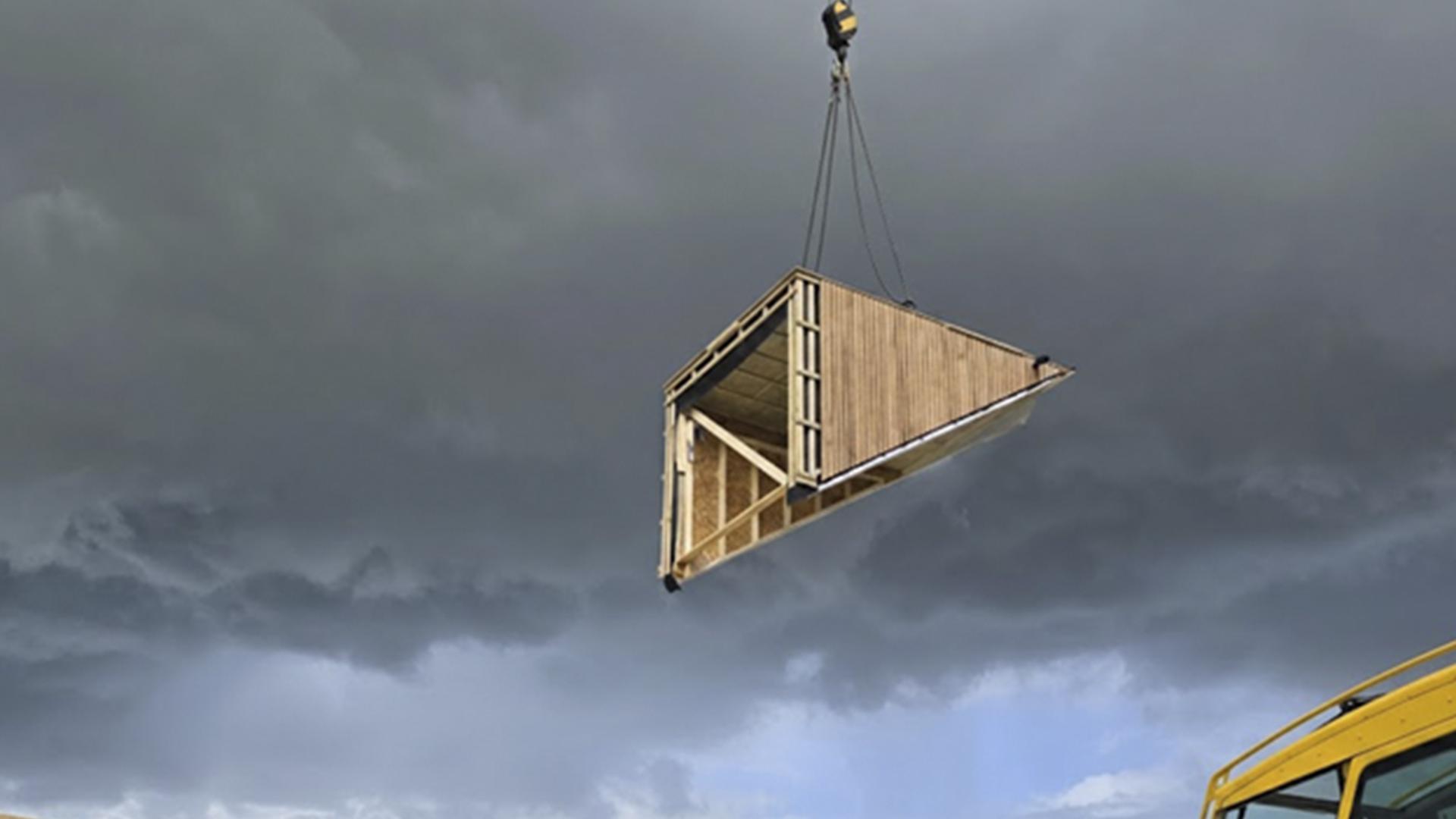
All rights reserved
Technical Details
- 年:
- 2026
- Companies:
- any
- 国家:
- Any
- 产品:
- EAGLINK MANTIS RAPTOR RAPTOR MAXI RAPTOR MINI TAPS VGS PLATE WASP